When Archives Come Alive: Fashion as Performance
Updated: Aug 5
Written by Witsarut Wannaboon
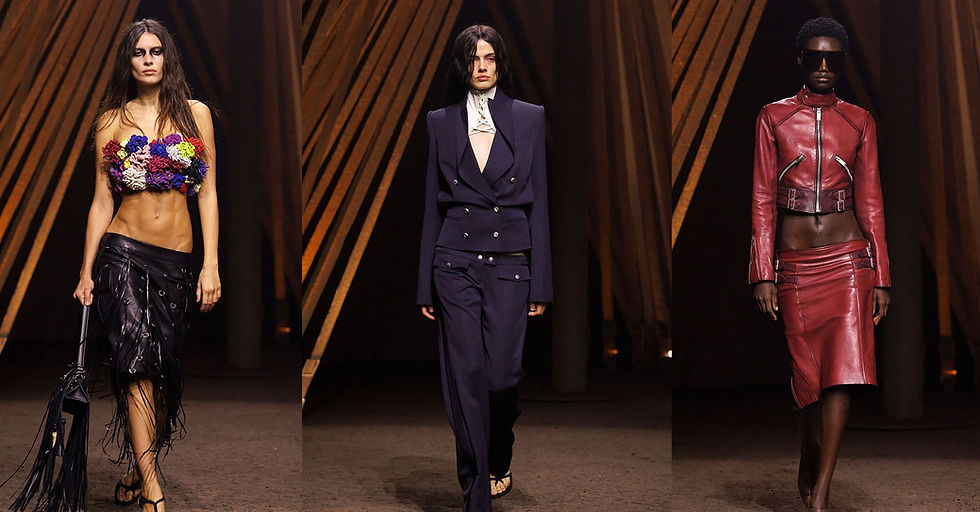
Photo Credit: Courtesy of Alexander Mcqueen
Fashion archives have long existed as quiet, almost sacred spaces—rooms filled with sketches, swatches, and garments preserved behind velvet ropes. Revered, but distant. Today, designers are finding ways to turn these archives into living experiences, allowing history to speak and perform rather than merely sit on display.
At Alexander McQueen, Sean McGirr has approached the archive as both inspiration and collaborator. One striking example is the reissue of the iconic Rosary heels, a piece originally imbued with McQueen’s signature theatricality. By bringing them back in contemporary collections, McGirr doesn’t just honour a relic; he places it in dialogue with today’s fashion sensibilities. Vintage tailoring, signature cuts, and historical motifs are reinterpreted alongside new constructions, making the archive feel kinetic. On McGirr’s runway, history moves—it performs, it lives.
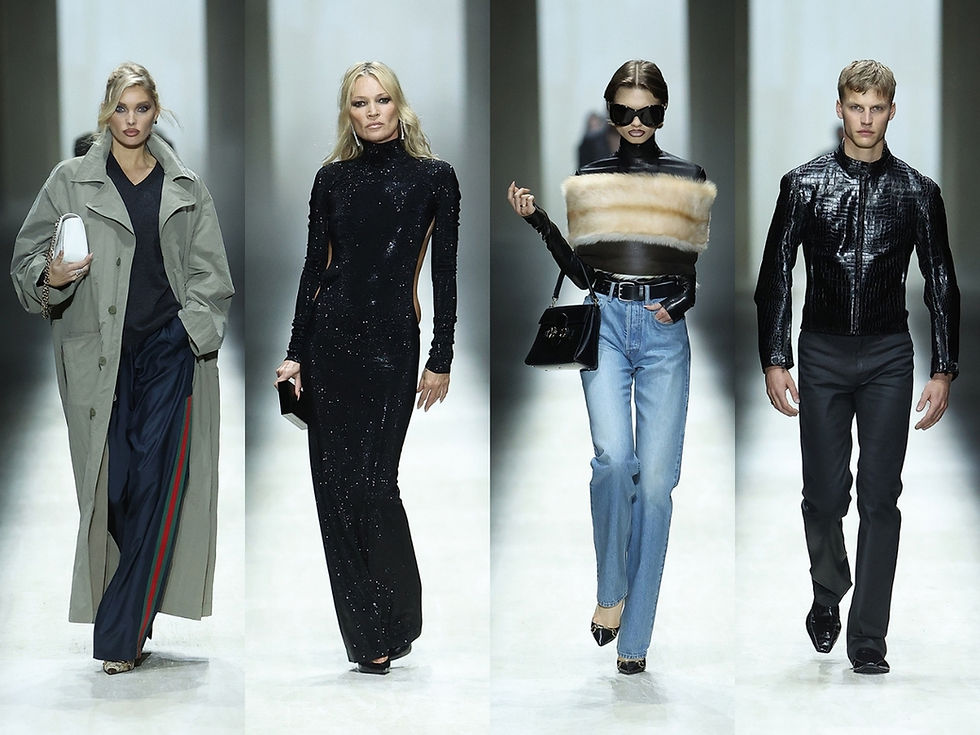
Photo Credit: Courtesy of Gucci
Across the fashion spectrum, Gucci under Demna Gvasalia takes a different but equally dynamic approach. Demna mines the house’s rich past, revisiting the glamour and boldness of Gucci under Tom Ford, while layering it with postmodern reinterpretation. Logos, prints, and archival silhouettes are recontextualised in oversized, streetwise shapes or paired with irreverent styling. Heritage doesn’t sit quietly; it intervenes, disrupts, and converses with the present, creating collections where the past is an active, sometimes provocative collaborator.
What unites McGirr and Demna is a shared philosophy: the archive is not a museum, but a source of vitality. Garments are enacted, not just worn. The history embedded in a Rosary heel, a tweed jacket, or a Gucci print is felt in movement, attitude, and context. Both designers transform heritage into performance, allowing the past to inform, challenge, and enrich the present.
This approach also resonates with audiences. For younger generations, seeing archival pieces reimagined makes heritage approachable and inspiring. It demonstrates that fashion is not about static perfection, but about dialogue, reinvention, and emotional connection. History becomes tangible, immediate, and alive.
In activating archives rather than merely preserving them, Sean McGirr and Demna Gvasalia remind us that fashion’s past is not a relic. It is a living language—a set of tools, gestures, and ideas that can evolve, inspire, and perform across generations. Heritage, in their hands, is not only remembered; it is lived.

Comments